
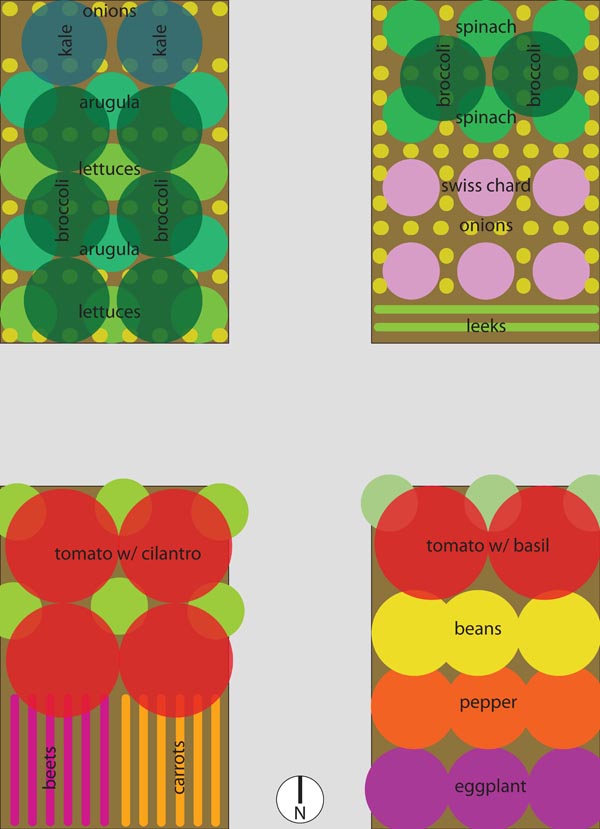
Companion plants are plants that pair well together because they require different things – either growing space or nutrients. For example, the small yellow dots in this year’s plan are onions. Lots and lots on onions. I tuck them in between leafy greens like lettuces and chard because the greens take up space above soil while the onions take up space below soil. I can fit in more plants that way.
This garden plan includes cool-weather plants that are thriving now and ready for harvesting – spinach, arugula and leeks (from last year). I planted larger plants around them to provide some shade this summer when it gets hot. Typically those cool weather crops will bolt, but I’m hoping to keep them in the garden a bit longer if things like broccoli and kale can shade them.
Want help with your own garden? I’m a landscape architect, and I design residential gardens in Portland: edible landscapes, native plantings and outdoor spaces that pull you outside. See my work at Renee Wilkinson Landscapes.
#agchat #urbanag 2014 Vegetable Garden Plan http://t.co/oDtSJfuVjR /by @HipChickDigs
Pingback: Why Practice Crop Rotation? | Hip Chick Digs
Pingback: 2015 Vegetable Garden Plan | Hip Chick Digs
Pingback: 2016 Vegetable Garden Plan | Hip Chick Digs