
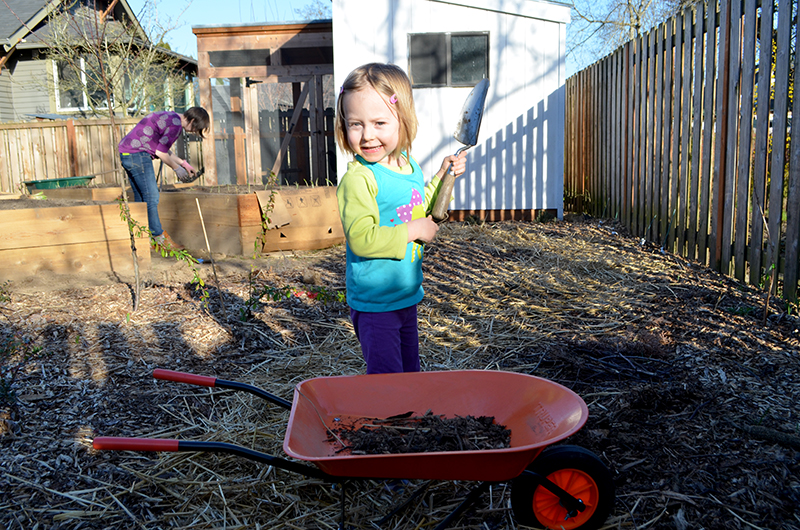
I love early spring planting! You can’t plant just anything – the warm season crops still need to wait for the last frost to be well past. But in many climates you are safe to plant cool-weather crops like onion sets, potatoes, shallots, peas and others.
“Plant your peas on President’s Day” and “Plant your potatoes on St Patrick’s Day” are a couple old garden sayings that hold fairly true in my climate. I planted about three times as many peas as I typically do because they are a great crop for kids. Juniper will likely gobble them up before any make it inside the harvest basket. They will help add nitrogen to the soil where my tomatoes will be planted in a few months.
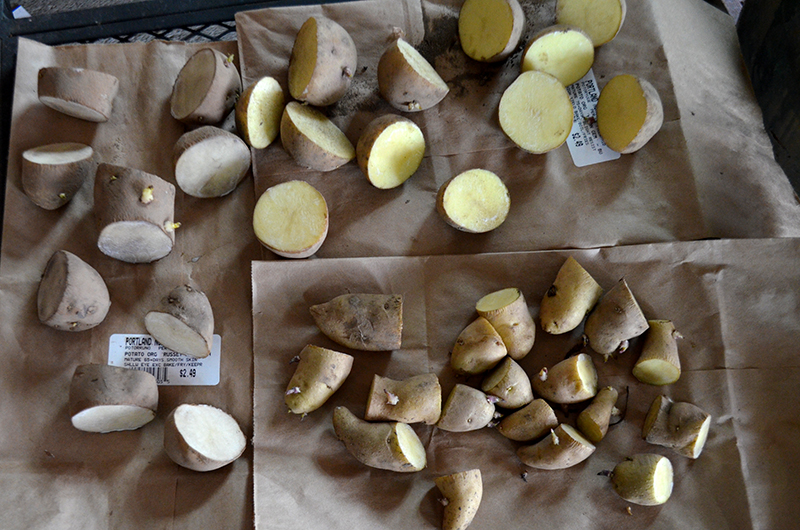
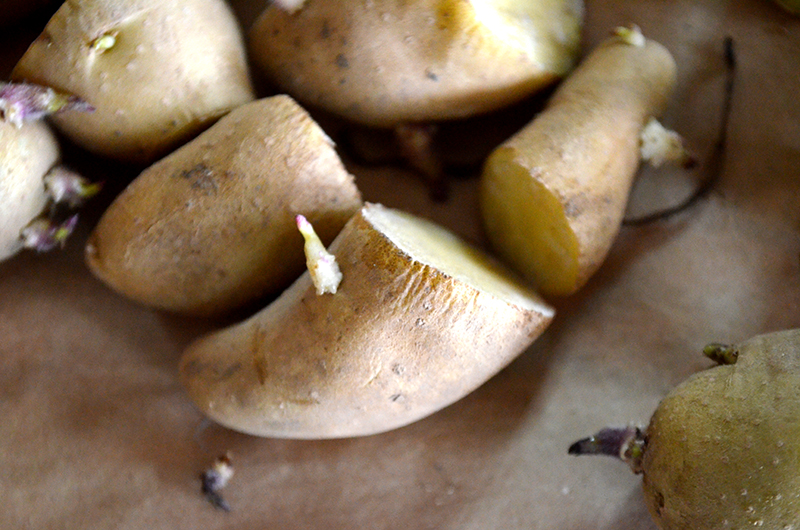
After experimenting with growing seed potatoes vs. organic potatoes from the store, seed potatoes have been the clear winner for me in terms of yield. My local nursery carries a wide range to choose from and they are going to be the best suited to our climate. Seed potatoes are more expensive, but I stretch mine by cutting them into halves or thirds – leaving at least 2-3 “eyes” per potato chunk. I let them air out for a day so the cut side is dry when planted.
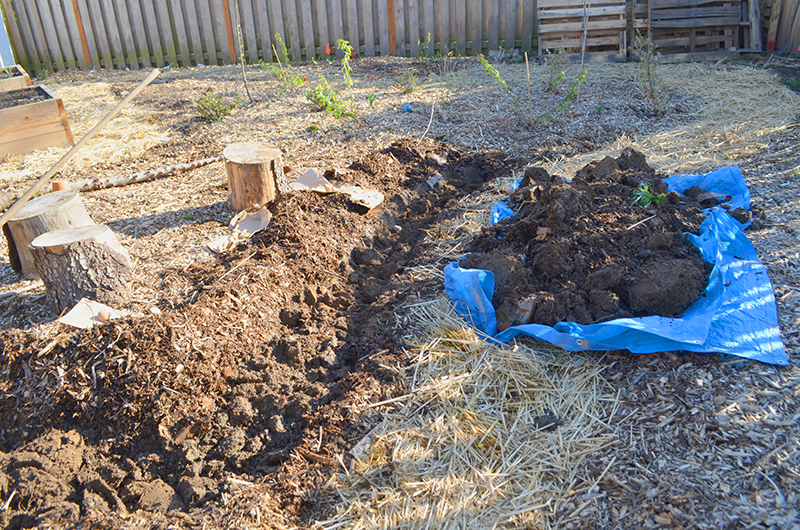
I used the Double-Dig Method to plant the potatoes – where you basically dig a trench, remove the soil, then dig again and leave the loosen soil in place to plant into. The leftover soil from digging trenches was piled onto a blue tarp, which was later moved into garden storage. I will use that soil to mound the potatoes as they grow in, encouraging them to make more potatoes. By late spring this muddy trench will be a lush green edge to our garden path. We will harvest the potatoes when the leaves die back – usually late summer or early fall depending on when we have time.
Onion sets are easy-peasy to plant. They don’t require particularly stellar soil and do not require much space. I tucked mine along the perimeter of our raised beds, about 4-6″ from the edge. They focus their growth underground, which leaves lots of space above ground for densely planted greens, future tomatoes and others. We are growing Walla Walla sweets and red onions this year – crops we eat a lot.
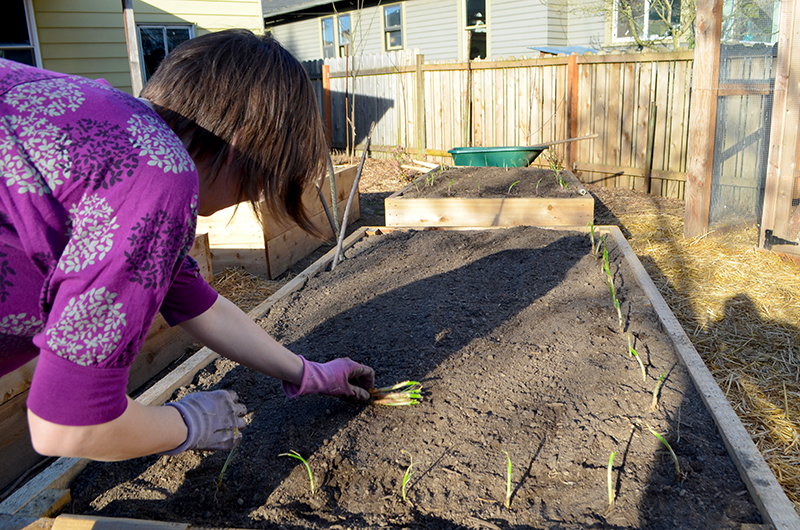
You might also be able to direct sow additional cool weather crops like lettuce, arugula, spinach, fava beans, beets and swiss chard. My four beds are planted out already, leaving a little space for the kale and broccoli starts I am growing inside still. Those will get transplanted outside in just a couple weeks. I can’t wait to see these beds packed with spring greens!
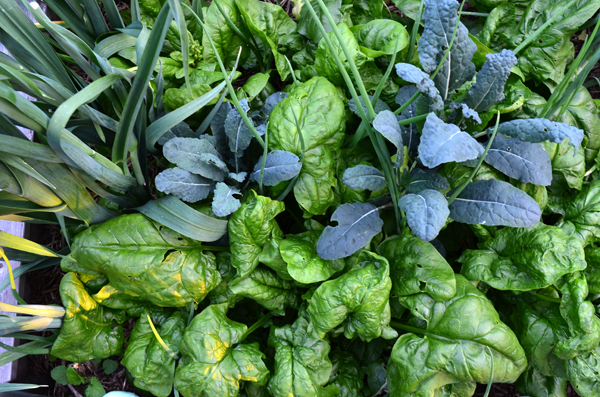
As the weather warms up, many of these cool season crops will bolt. That happens just in time for them to get pulled out and my warm-season seed starts to get transplanted in, like tomatoes peppers, eggplants, etc. And it always coincides with the point where we feel ready for a break from spinach and kale.
Are you planting outside yet or is there snow still on the ground? I would love to hear what your plans are and where you are finding space for all your crops. Tell me about it in the comments below!
#agchat #urbanag Early Spring Outside Planting http://t.co/CyBuj8JhrA /by @HipChickDigs
Debbie Moore liked this on Facebook.