


***Warning: This is a pretty graphic post about how to butcher a chicken, complete with pictures and lots of description. My intent is to help people who are preparing to butcher their first bird.***
On a recent Sunday morning, a local Eugene friend invited people over to learn how to properly kill and butcher chickens. She raises broilers every summer in her urban backyard, feeding them organic food and letting them free-range under the blue sky. These guys fill her freezer and provide her with meat for the year. Although I have killed a couple chickens before, I was curious to see the “proper” way to do it.
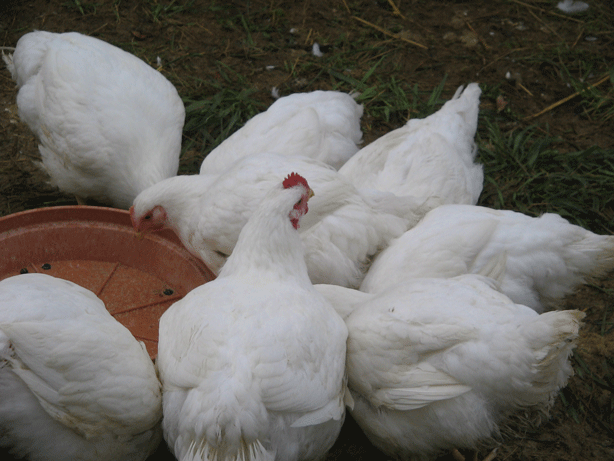
Broilers have been breed over the years to be rather dumb and gain weight incredibly quickly. By the time they are only 8-12 weeks old, they need to be butchered lest they eat themselves so fat that they can’t walk or have a heart attack. The chickens we butchered were actually roosters, but the meat from broilers tastes the same really. This is not the case for egg-layers, whose roosters taste tough and lean.
When you catch a chicken, it is important to make sure your hands are covering their wings to prevent them from flapping out of your hands. Once caught, hold them snugly to your body. I think most animals get a calm feeling when they are held snugly. Perhaps it’s the heart beat they hear or maybe it’s just comforting for other reasons. I ended up doing a lot of the killing because I was pretty good at the catching without causing the birds to really freak out.
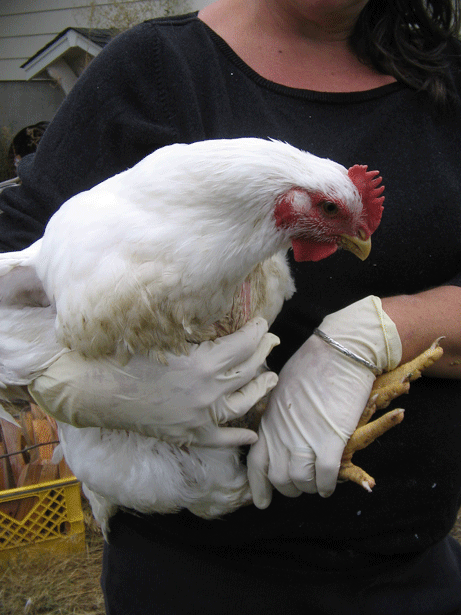
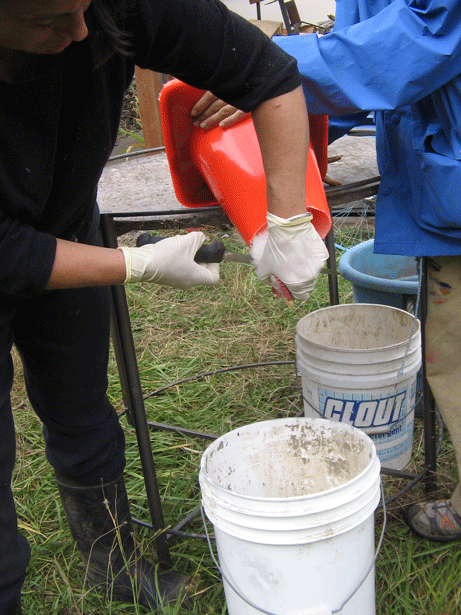
The birds are held by their feet, then gently turned upside down. Chickens get disoriented when they are upside down and after a few seconds they become very calm, their wings kind of relax out. After they become disoriented, we slid them down into a small construction cone with the top cut off and a bucket down below.
One person held their feet at the top and the other person (often me) took a knife and slit their throat. I covered their face when I did it, to continue to keep them as unaware of things as possible. They bleed to death from there, which I am told is one of the most humane ways to die – the blood rushes out of your body as you pass out. There is usually some twitching at this point, even though the bird is dead quite quickly, as the body shuts down and nerves react. The blood streams down into the bucket below the cone.
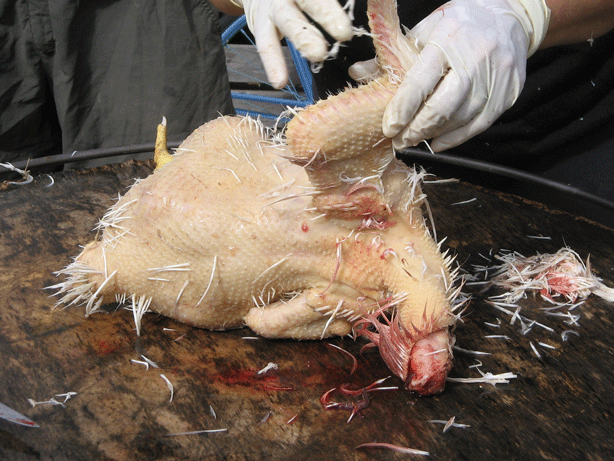
Once the bird is done bleeding, the head comes off and they are plunged into a very large pot of water that is about 140 degrees in temperature. The bird is submerged for about ten seconds, which loosens the feathers without cooking the bird. The bird is then defeathered, starting with the wings and tail feathers which are the hardest to remove. The other feathers should come out pretty easily by just wiping them off. If they are not coming out easily, the bird needs to go back in the water for a few more seconds.
There was a separate station for working on the inside of the bird. It is good to keep these as two separate areas to ensure everything stays clean.
With the chicken on its back and using a sharp knife, cut down the neck until you find two tubes. One will resemble a vacuum cleaner hose, which is the esophagus. Cut this off as far down as you can and discard. The second tube will be the one leading to the crop.
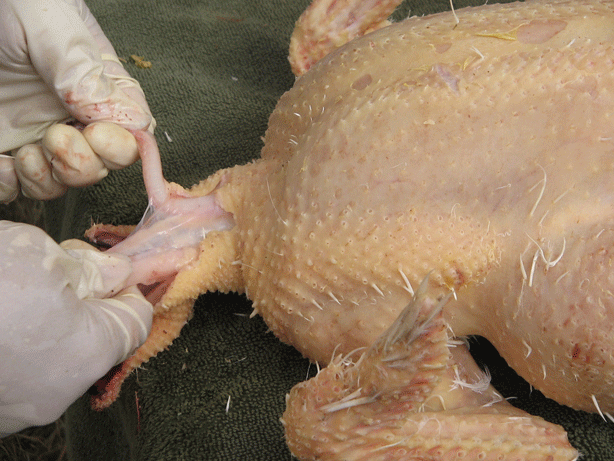
My friend didn’t feed the birds the day before, which meant cleaning the crop would be less messy. Follow the crop tube down until you find the attached bag, which is the crop (pictured below). Pull this out as far as possible, cut and discard.
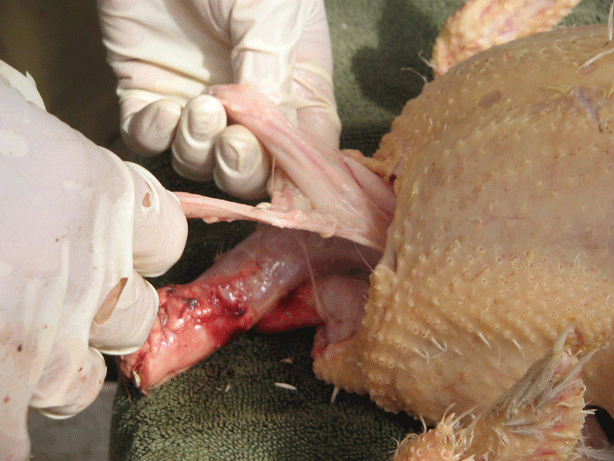
Turn the bird around, still on its back, and begin the cleaning. Start by cutting a “Y”, which means a straight line from the bottom of the breast bone, about two inches. Then cut to either side at a diagonal down to either side of the tail. Make sure you only cut deep enough to pierce the skin. The intestines are right under your knife and you really, really want to avoid cutting those open.
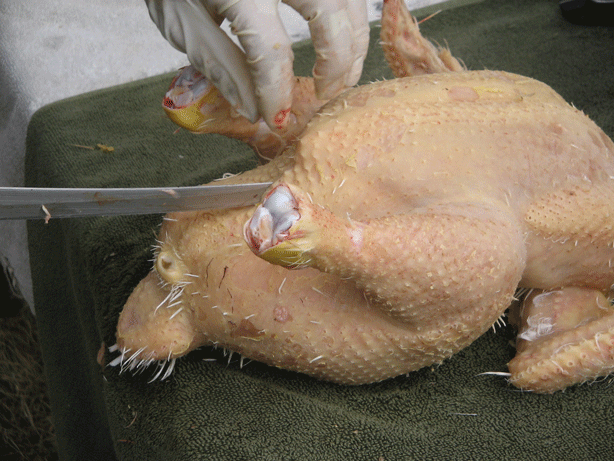
With your knife angled almost straight down, cut a horizontal slit right below the anus along the tail, connecting to the two end points of your “Y”. In the picture below, the person was holding the knife to demonstrate where we would be cutting.
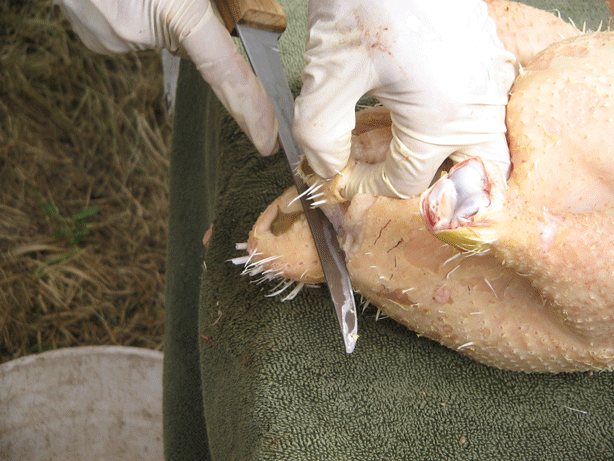
You have now cut straight down a few inches, along either side of the body cavity, and then along the underside of the anus. You should be able to now gently pull the anus out, which will also pull the intestines and such out.
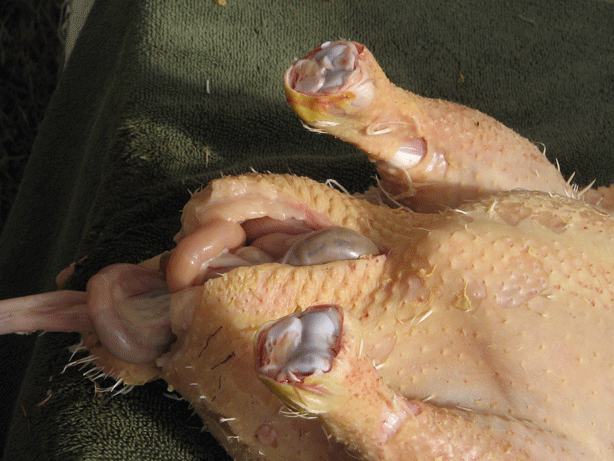
Once you have some guts pulled out, put your hand inside the bird. Using the side of your hand like a spatula, move along in internal body cavity to loosen any guts from the walls. This should help you gently pull everything out. Be very gentle with the galbladder, which will be an almost black organ with a texture similar to the intestines. This is the absolute worst thing to puncture, as it holds all the bile and super gross stuff.
You may choose to keep the heart and liver as you clean the bird. Plunge those into cold water if that is the case.
Once cleaned, the bird needs to be rinsed with a hose and plunged into ice cold water for it to cool quickly.
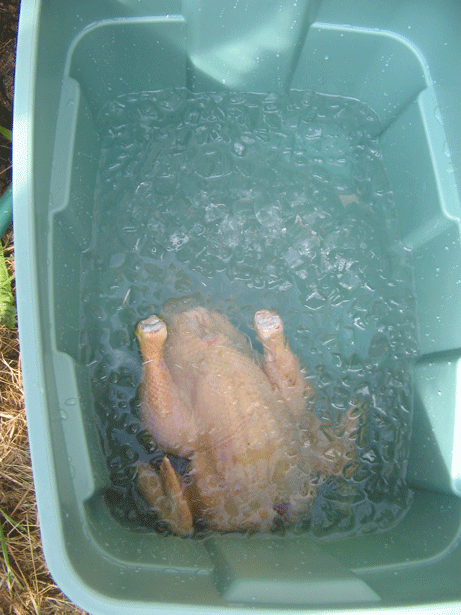
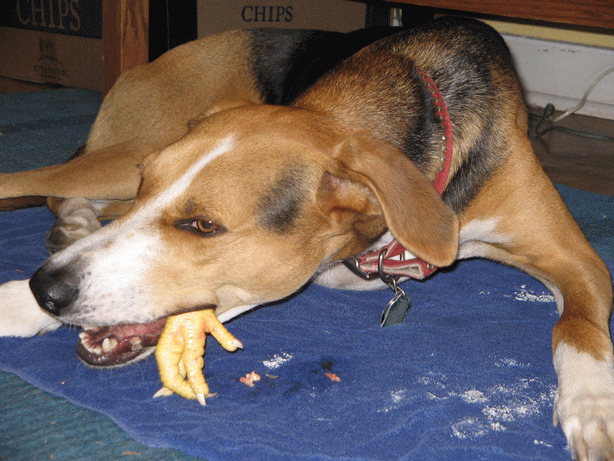
On average, the eight week old roosters weighed around 5 1/2-6 pounds. My friend was sweet enough to send me home with a bird to eat and chicken feet for our dogs to enjoy. The feet are also good when making chicken stock, but unfortunately we just don’t have the freezer room right now.
Maybe it’s because I have killed a couple chickens before, or maybe because I am really aware already that something died to become my dinner, but I didn’t leave feeling sad or disturbed. These birds are breed for one purpose: meat. And I feel like the ones I handled were pretty calm and died very quickly. It makes me happy to know they saw sunshine and ate worms in the green grass before their time was up – something most chickens that end up as dinner never experience.
I know not everyone will agree, and I hope that means they are vegetarian! It is a process I think every meat-eater should experience at some point in their lives. In the end, it makes us more grateful when we sit down to enjoy a cider-braised chicken for dinner.




My friend and I just butchered our first set of meat chickens. We used a killing cone made from a 5 gallon bucket from home depot based on instructions we found on the internet. Cut off the bottom, cut the side, and then twist it into a funnel shape using duck tape to secure it. You can adjust it for other size birds by just removing the tape and opening up the funnel more. We nailed the cone to a tree, and then hung a bucket underneath to catch the blood.
I’ve found there is a real mental and emotional difference for me between the meat substance known as chicken that I buy at the grocery store, and the chicken chickens that we raised and are in the freezer now. It’s almost as if they are two completely different and unrelated things. The grocery store version I can eat without thinking, the home raised come with all the memories both lovely and unpleasant that were created along the way.
I really got some useful information after reading your article. I have been killing and butchering chickens off and on for many years. I have been doing it wrong all this time.
Also, I was wondering, what you do with really old chickens. I have several old hens (three years old) that are past their egg . Do you find this type of hen is worth butchering?
I was just going to kill them and bury them. My past experience with this type of bird found them to be too tough to cook. Perhaps it was because my slaughtering methods were unsuitable. Also, when do you find that hens should be taken out of the egg production process? It’s hard to keep watch on who is laying and who isn’t. it an age issue? Lastly, do you band your birds to keep track of their age? I have a couple dozen and have trouble keeping track of them.
Thank you for your time.. Sincerely, Terry Roszatycki, Port Angeles, Wa.
Terry, I only have a handful of chickens and they are different breeds, so I can tell them apart/no need for banding them. Chickens will lay a certain number of eggs in their lifetime. Since I don’t force them to lay in the winter, they take a few months off and will then lay for more years. My oldest is seven and she lays regularly for about five months out of the year. When they are old and no longer laying, they are generally just good for stew or making stock, but real tough to chew. Mine will probably just live out their old age though, since I have enough eggs from the younger girls and it’s more of a hobby than a business for me. On a farm, when it’s more of a business, you have to weigh what you’re spending on feed against their productivity, so in that case they might end up in the stew pot. Best of luck!
Hi. newbie here. im planning a small home based farm with 5 turkeys, 2/3 hens and eventually a peacock. i thought it would be easy to just turn any trouble makers or non layers into dinner but after reading i am still wondering how i will accomplish this. i know how i am and killing animals is not high on my todo list, however i feel with all the animls i have enjoyed eating all these years i should be able to do this or as it says, turn vegan. since i hava a pretty decent taste for animals… i imagine i’ll get used to it, but it really does create a dilemma for some of us. Is it cheating to have someone else do it for ya, then compensate them somehow? i’d hate to give away my birds because i was… chicken…(pardon me) but i really know i will rather eat their feed then them when the time comes, no matter how juicy they may seem in my imagination. Thanks for giving me more to ponder. this is NOT an easy decision for this dirt poor, long haired 4o+ year old dude.
great information, just what i have been looking for.. like many of the people who commented i am new to killing my chickens… this year i bought chickens to breed for future meat chickens and bought 25 (meat ) chickens just so i would have meat this year. store bought chicken quality is so iffy…. so i’m taking the plunge.. all my old chickens get put out to pasture.. they worked hard for us.. thanks to the info about letting them rest in the winter tells me why my chickens are still laying at seven years old.. i never knew you could force them to lay… something i wouldn’t do unless i was desparate. the tip about making the butchering cone was perfect.. thanks everybody……. france
Hi everyone, I am new here also. we just started our little homestead, we ordered 23 egg layers and 2 roosters, several different kinds, but somehow we winded up with with 27 egg layers and 3 roosters, yes ( 30 ) all together. Then we decided that we wanted to raise some for meat, ordered 100 cornish cross. They are 7 weeks, only 4 with broken legs, and 1 died today I think of a heart attack. We start slaughter this weekend, the plan is to do 50 in the morning and the remaining at night, we are making a wiz bang plucker. we have everything, we just have to put it together. I hope it goes well, my dh has done the slaughtering before, but I haven’t and I’m kinda nervous about it, I have it in my my mind that they are just for meat. Now I would have to hurt someone over my egg layers, I love my lil babies, an I am very attached to them and they are to me too, I never knew chickens could be so friendly and loving..
Thanks for this. I think maybe grabbing your chicken real early while they were still on the roost is a good idea. Since they do most of their pooping there during the night their insides should be pretty empty too. And they are so docile at this time. One could easily put a small cover over their heads at this point. Keep it on until after the bleedout. That not only keeps them quiet but what they can’t see can’t frighten them. Add that to what you’ve already provided and I’d say you’ve got it covered.
Lots of good thoughts here. Thank you.
I did it! I didn’t think I could do it but I DID IT! And yes, I teared up when I killed the chicken, but I surprised myself when I conquerred this fear. Thank you for the post and the pictures because it helped walk me through the process. And I also surprised my friends and husband, because I’m a girlie girl. Thank you, thank you, thank you!
Awesome! thank you! we are butchering our first crew on Saturday. We have a lady coming to do it, but she comes to TEACH you, not just do it all, so your article was tremendously helpful!
Thanks and look forward to reading more from you in the future!
Hi there ….. I’m from Western Australia and live on 5 acres of land with about 2 dozen free range chickens ( and my partner and sister ) and we have just decided that we will start o slaughter ( awful word ) our own chickens for self sufficiency purposes. I was not sure how to go about it …. ringing their necks seemed so cruel but your article really gave me some fabulous insight on how to terminate a chickens life ( one of God’s creatures after all and requires kindness ) so I will gather my courage and try your method. Thank you again.
We just brought home our first batch of chickens last night. Unfortunately, one of them was injured in the delivery and died this morning. I heard the ruckus in the hen house and got her out and chopped of her head. She is now bleeding out and I am about to prepare my first chicken. Wish me luck! Yuck! Of course, my husband is at work. He will enjoy a chicken dinner without any of the trauma!
OK, she’s cut up and soaking in ice water. We were TOTALLY unprepared for a butchering situation. We thought our problems would just be getting our 17 or so adult chickens reoriented to a new home and protecting them from the high heat we’re having in Texas. I was lucky to get to the only injured one right after she died, but I had to do all the cleaning, feathering, etc. in my kitchen sink. Gross. I figured I would pull skin and feathers off so I wouldn’t have to pluck and that would be less mess. Ha! I had to cut off the wings and legs to get off the skin. There were a lot more loose feathers than I had imagined there would be. Thank goodness for sink strainers. Then I accidentally cut thru the craw. Gag. Oh, well, it fed our septic system, right? I was surprised to find 5 egg yolks inside (without the shells and covered in veins). Can these be eaten by our dog? I’m feeding her the liver and heart. The rest of the guts go out back to feed the woods critters, I guess. Vultures will have them eaten before the night critters will get a chance at them. Thanks for the info. Hope I don’t have to do this again for a while. I will certainly enjoy eggs in the mean time!
Pat, it is hard to do a smooth job when you don’t have the time to get everything setup. Sounds like it’s going ok though. I would think the egg yolks are fine to feed to the dog. The pup might like the chicken feet too, or you could save them for making stock. If you leave unwanted pieces outside for wild animals to come eat, keep in mind that may draw them to your flock! You don’t want to bait potential predators to get too close to your livestock. Good luck!
Thanks for the very detailed info. Being a chef I was very aware of what the end product looked like but not how to get there. It was so much easier then I expected (thanks to your detail). Being a chef I always appreciated and respected my product, but this has given me a whole new depth of respect for our food and the chickens I raise.
You didn’t mention the oil gland just at the base of the spine and above the tail. I have heard that cutting it out was the thing to do.
On chickens? That is news to me Kath. I’ve never done that or heard that from others when processing chickens and it’s all worked out fine! Maybe that’s an optional step then?
This is incredibly helpful! What do you feed your chickens? I recently moved to Africa, and live in a house with ten orphaned girls. Meat or protein here really is a rarity. So I just hired some guys to build me a chicken coop. (Did my research! So I think it is everything it should be. A place to perch, a place to lay, a large space to move around. It is all enclosed, and they cannot “freerange” outside of it. Because, well, many reasons!) I am hoping to have some to lay eggs, and hatch some, so we can have a routine of slaughter, and eggs, and hatching. Not sure what I am doing. But I am sure I will be pouring over these pictures again soon, when I can slaughter my first chicken.
Hi, I have a question. On a small homestead, what do you do with the blood, and other unwanted parts, guts, feathers, etc.? I have read many article about slaughtering chickens, but none of them explain what to do with the waste. Thank You!
We toss them. Organs, like livers and kidneys, you can cook for stock. Feet you can feed to dogs as a treat. But “guts” like intestines we toss. If you wanted to collect and clean the feathers, they might be okay for stuffing but we have not tried that. Pigs would probably love to eat the blood and unwanted body bits.
Thanks for the article. I have raised chickens several different times and am thinking about doing it again. The information is about what we have done in the past. The cone is a great idea!
Thank you for this great information! I was looking for a way to dispose of 2 extra roosters who are causing a lot of trouble. They are young so I thought I would try processing them for meat. Ever processed a Silkie?
Ellen, I have never processed a Silkie but these instructions should be adaptable to them as well. Best of luck!
Thank you! This was just what I was looking for 😉 I am fast approaching 59, and have been a widow for 1 1/2 years. My best friend and I are planning a small homestead, and chickens are on the list of things we will be raising – primarily for the eggs. However, though we are both flexitarians, and she loves chicken as much as I do, I know she would not be able to do what must be done if one of our birds needed being turned into supper. It will be up to me, the former city girl turned country pragmatist, to deal with this, and I was looking for a straightforward and simple explanation. This was exactly what I needed 😉
we have been butchering for a couple of years some of Cornish cross had a red color to the meat? we are wondering why and is ok to eat. We use the cone method and most had nice pinkish color but wondering about reddish color?
I have not encountered that issue before Kim. I recommend calling your local feed store to ask for their advice. They are usually very knowledgeable when it comes to backyard livestock issues.